
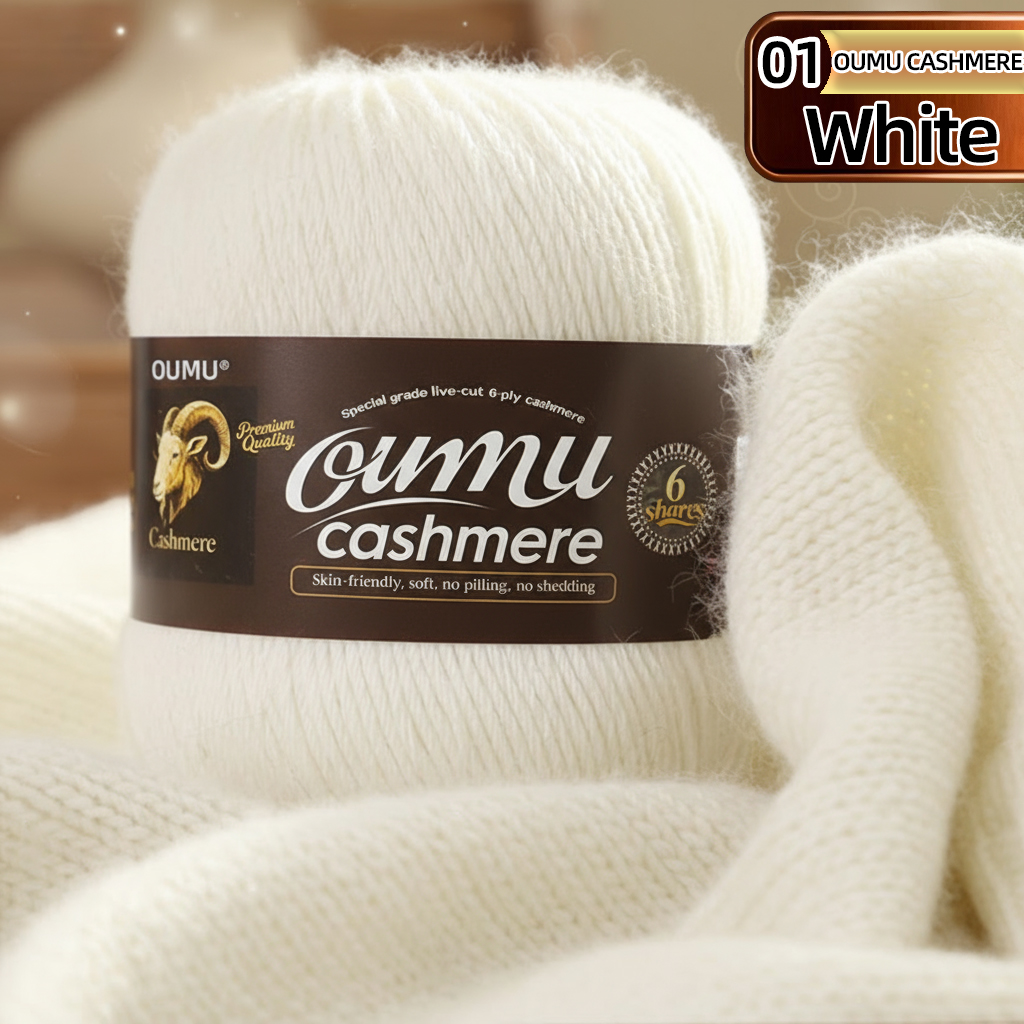
Wool is the soul of hand-knitting, the carrier of winter warmth, and an indispensable raw material in clothing processing and home decoration. Whether you are a newbie in knitting or a practitioner who has been working with wool all year round, faced with the wide variety of wool types, materials and specifications on the market, you will inevitably be confused: What are the differences between wools of different materials? How to choose one that suits your needs? How to maintain it after buying it home to extend its service life? Today, Li County Oumu Woolen Textile Co., Ltd. will bring you a comprehensive explanation of wool, from basic knowledge to practical skills, explained in one go, to help you easily play with wool.
Lixian Oumu Wool Spinning Co., Ltd. has been deeply involved in the wool industry for many years. As a professional wool manufacturer and exporter, it has advanced production equipment and a strict quality control system. It specializes in gradient wool. All categories of wool including yarn, baby yarn, cashmere yarn, chenille, milk cotton, etc. cover various scenarios such as hand knitting, clothing processing, brand customization, etc. With its stable quality and considerate service, it has become the preferred partner for many practitioners and enthusiasts. You can view the full category product details on the official website ioumu.com.
1. Core classification of wool: divided by material, choose the right one to be practical
There are many ways to classify wool. Classification by material is the core and most practical one. Wool of different materials has very different feel, warmth, durability and applicable scenarios. You can choose accurately according to your own needs.
1. Natural material wool: comfortable, breathable, and outstanding texture
Natural wool is mainly made of animal fiber and plant fiber. It is environmentally friendly and comfortable. It is the most popular category on the market and one of the core categories of Lixian Omu Woolen Textile.
- Wool thread: The most common natural wool, made from sheep, has a soft and fluffy feel, excellent warmth retention, good elasticity, and is not easily deformed. It is suitable for knitting sweaters, scarves, hats and other winter clothes. After special treatment, high-quality wool thread is not easy to pill or shrink, and is very cost-effective, making it the first choice for daily knitting. The wool yarn of Omu Woolen Spinning is made of high-quality sheep wool. After multiple quality inspections, the yarn is uniform and has a delicate feel. It is suitable for making all kinds of winter knitwear.
- Cashmere thread: Known as "soft gold", it is made from cashmere. It is softer, warmer and lighter than wool. It does not feel itchy when worn next to the body. It has a high-grade texture and is suitable for knitting high-end sweaters, shawls and other close-fitting clothing. However, the price of cashmere thread is on the high side, and maintenance needs to be more careful to avoid vigorous pulling and washing.
- Cotton thread: Plant fiber material, excellent breathability, sweat-absorbent and skin-friendly, soft to the touch, bright in color, not easy to fade, suitable for weaving summer clothes, baby clothes and home accessories (such as placemats, pillows). Cotton thread has good toughness and is easy to take care of. For beginners starting to knit small items, cotton thread is the first choice to avoid making mistakes.
- Alpaca yarn: Made from alpaca, it feels finer than wool, has better warmth than wool, is less prone to pilling and shedding, and has a natural and soft color. It is suitable for knitting high-end sweaters, cloaks, etc., and is both practical and beautiful.
2.Man-made fiber wool: cost-effective, easy to care for
Man-made fiber wool is made of chemical fiber and is affordable, easy to care for and highly durable. It is suitable for mass production and daily practical weaving, and is also a common choice in the garment processing industry.
- Acrylic yarn: The most common artificial wool, soft to the touch, close to wool in warmth, low in price, not easy to shrink, not easy to pill, easy to clean and easy to dry, suitable for knitting coats, scarves, gloves, etc. It is also suitable for novices to practice knitting, and is extremely cost-effective.
- Polyester thread: Strong toughness, high durability, not easy to deform, good gloss, suitable for weaving items that need to be shaped (such as bags, hat brims), often blended with natural wool to improve the durability of the wool.
- Chenille thread: It has dense velvet on the surface, feels plump and thick, has a soft luster, and has a high-end visual effect. It is suitable for weaving home accessories such as sofa covers, curtains, and pillows. It can also be used for partial decoration of sweaters to create a fluffy texture. European woolen chenille yarn has a uniform pile, is not easy to shed, and is rich in color. It is a popular choice for home knitting.
3. Blended wool: taking into account the advantages and adapting to a variety of scenes
Blended wool is made by mixing two or more materials, taking into account the advantages of different materials and making up for the shortcomings of a single material. It is currently the most widely used type of wool on the market. For example, wool + acrylic blends not only retain the warmth and softness of wool, but also increase the durability and ease of care of acrylic, and are more affordable; cashmere + cotton blends have both warmth and breathability, making them suitable for close-fitting wear. Lixian Oumu Wool Spinning can customize various types of blended wool according to customer needs to meet the needs of different scenarios.
2. Wool purchasing skills: novices should not step into pitfalls, practitioners should choose the right product
When purchasing wool, in addition to looking at the material, you should also pay attention to details such as specifications, feel, and color fastness. Wool for different uses has different priorities. Master the following tips to easily choose the right wool.
1. Look at the specifications: select the number of counts and strands according to the weaving requirements
The specifications of wool mainly depend on the "count" and "number of strands". The higher the count, the thinner the wool; the more strands, the thicker the wool and the stronger the toughness.
- Fine-count wool (such as 24-count, 32-count): suitable for weaving light and thin clothing (such as summer cardigans, close-fitting base shirts), with a delicate feel and good breathability.
- Medium-count wool (such as 12-count, 16-count): moderate thickness, the most versatile, suitable for knitting sweaters, scarves, hats and other daily clothing, and can be easily used by novices.
- Thick yarn (such as 6, 8): The yarn is thicker and the knitting speed is fast. It is suitable for weaving thick coats, cloaks, blankets, etc., and has strong warmth retention.
2. Look at the hand feel: soft and even, no impurities
High-quality wool feels soft, delicate and elastic, has no hard stems and impurities, and is not easy to break when pulled; inferior wool feels rough, stiff, easy to fluff, easy to break, and may feel itchy when worn next to the body. When purchasing, you can gently rub the wool to feel its softness, and check whether the yarn is even and whether there are any clumping, yarn breakage, etc. Each batch of Omu Woolen's wool has undergone strict quality inspection. The yarn is uniform, delicate to the touch, and free of impurities. You can buy it with confidence.
3. Look at the color fastness: not easy to fade, uniform color
The color fastness of wool directly affects the use effect, especially light-colored and bright-colored wool. If the color fastness is poor, it will easily fade and dye after washing, affecting the appearance. When purchasing, you can wipe the wool with a wet paper towel. If there is no obvious staining on the paper towel, it means the color fastness is good; at the same time, check whether the color of the wool is uniform and whether there is any color difference, color bloom, etc.
4. Depend on the purpose: choose according to needs, no waste
Wool for different uses has different purchasing priorities:
- Hand-knitting (novices): Give priority to cotton thread, acrylic thread or wool + acrylic blended thread. It feels soft, easy to knit, not easy to make mistakes, and the price is affordable.
- Winter clothing (sweaters, scarves): Give priority to wool, cashmere or alpaca wool, which has good warmth and outstanding texture.
- Baby clothing: Give priority to pure cotton thread and pure wool thread (after anti-allergy treatment), no fluorescent agent, no odor, skin-friendly and breathable, safe and environmentally friendly.
- Clothing processing and mass customization: Priority is given to blended threads and acrylic threads, which are highly durable, easy to care for, affordable, and support bulk delivery. Lixian Omu Woolen Textile can handle large and small orders and provide customized services.
3. Wool care methods: extend service life and maintain beauty
Good wool requires good care. Wool of different materials has slightly different maintenance methods, but the core principle is "wash gently, dry in a cool place, and avoid exposure to the sun." Master the following skills to keep your wool products looking new for a long time.
- Washing Tips: Woolen products made of natural materials (wool, cashmere, cotton) are recommended to be washed by hand, using cold or warm water (not exceeding 30°C), adding special detergent, and rubbing gently to avoid vigorous scrubbing and soaking (soaking time does not exceed 10 minutes); woolen products made of man-made fibers (acrylic, polyester) can be machine washed, but they need to be adjusted to the gentle mode to avoid mixing with hard objects. After washing, rinse gently with clean water. Do not wring it out hard, but press gently to squeeze out the water.
- Drying Tips: No matter what kind of wool products are made, avoid exposure to the sun. Exposure will cause the wool to fade, become brittle, and lose elasticity. After washing, lay the wool products flat in a ventilated and cool place to dry. You can gently adjust the shape to avoid deformation.
- Storage Tips: When storing wool and wool products, keep them dry and ventilated to avoid moisture and mold; moth balls can be placed (away from baby's clothes) to prevent moths; wool balls should be neatly arranged to avoid knotting and entanglement; knitted clothes can be folded and stored flat to avoid hanging and preventing stretching and deformation.
- Special maintenance: For cashmere thread products, it is recommended to dry clean to avoid shrinkage and deformation caused by washing; for chenille thread products, wash gently to avoid fluff shedding. After drying, you can gently comb the fluff to restore the fluffy texture.
4. Common woolen yarn misunderstandings: avoid these and avoid detours
Many people fall into some misunderstandings when using woolen yarns, which makes woolen products easy to damage and not durable. Today I will dismantle them one by one to avoid these pitfalls.
- Myth 1: The more expensive the yarn, the better. In fact, the quality of wool does not depend on the price, but on whether it suits your needs. For example, if a novice is practicing knitting, it would be a waste to choose expensive cashmere thread. Acrylic thread and cotton thread are more cost-effective and more suitable for practice.
- Myth 2: The thicker the wool, the better the warmth retention. Warmth retention mainly depends on the material, not the thickness. For example, the warmth retention of fine-count cashmere thread is much better than that of thick-count acrylic thread.
- Myth 3: All wool can be machine washed. Woolen products made of natural materials (especially cashmere and wool) are easy to shrink and deform when machine washed. It is recommended to hand wash or dry clean.
- Misunderstanding 4: Ignore the color fastness of wool. If you do not pay attention to the color fastness when purchasing, it will fade or stain after washing, which will not only affect the appearance, but may also damage other clothes.
The world of wool may seem complicated, but in fact, as long as you master the core skills of material, purchase, and maintenance, you can easily choose the right yarn and use it well. Whether you are a hand-knitting enthusiast or a garment processing or home decoration practitioner, you can make more refined and durable works by choosing high-quality wool.
If you are looking for high-quality, full-category wool, you may wish to pay attention to Lixian Oumu Wool Spinning Co., Ltd. We have been focusing on wool production for many years, covering all types of wool such as natural materials, artificial materials, and blended materials. We support sample testing, batch delivery, and customized services. The quality is guaranteed and the service is more considerate. If you want to know more about wool products and purchasing tips, you can visit the official website ioumu.com to unlock more knowledge about wool. You can also directly consult our customer service to provide you with one-on-one material selection suggestions to help you play with wool and create your favorite works.