
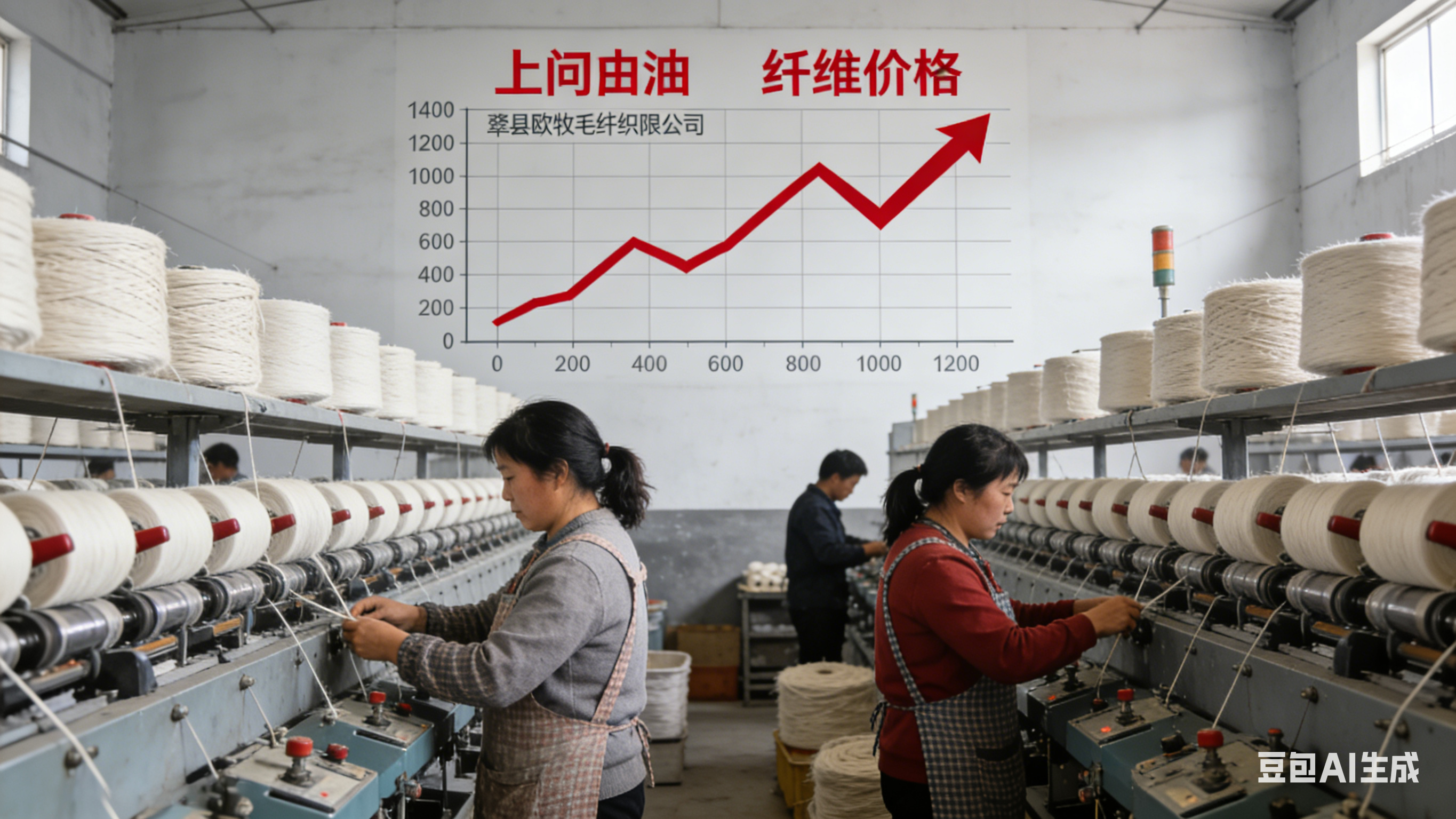
In March 2026, a geopolitical conflict originating from the Middle East triggered an unprecedented "price earthquake" in the global textile industry chain. As the core raw materials of the textile industry, polyester POY and polyester staple fiber experienced an extreme price surge of nearly 2,000 yuan / ton in a single day in mid-March, with an increase of up to **21%, setting the largest single-day increase in the past three years. This chemical fiber storm driven by soaring oil prices has quickly swept through the entire industrial chain from raw materials and dyes to fabrics and ready-made garments. Major textile towns such as Shaoxing and Shengze have urgently suspended orders, and the market has fallen into a deadlock of price and no market. The upcoming autumn and winter clothing market is facing an overall price increase pressure of 5%–15%**. In the center of the storm, Lixian Oumu Woolen Textile Co., Ltd. relies on its forward-looking layout, stable supply chain and flexible adaptability to stand firm in the industry's huge earthquake and become the backbone of stabilizing the market and ensuring supply.
1. Source of the storm: The conflict in the Middle East has pushed up oil prices, and the entire chemical fiber industry chain is "high fever"
The core trigger of this round of skyrocketing chemical fiber prices is the out-of-control international oil prices caused by the escalation of geopolitical conflicts in the Middle East. As the core hub of global oil supply, the turmoil in the Middle East has directly impacted shipping safety in the Strait of Hormuz, causing international crude oil prices to fluctuate violently. Brent crude oil once exceeded $110 per barrel, an increase of more than 60% compared with before the conflict.
Petroleum is the "root" of the chemical fiber industry - Polyester (polyester fiber) As the largest chemical fiber variety in the world, accounting for more than 60% of the total textile raw materials, its production is completely dependent on petroleum derivatives (PTA, ethylene glycol). The surge in oil prices is rigidly transmitted along the industrial chain:
- Chemical fiber raw materials: Polyester POY surged from about 7,000 yuan/ton at the end of January to 9,600 yuan/ton in mid-March, with a cumulative increase of more than 35%; in March, it soared by 2,000 yuan/ton on a single day. tons, directly breaking through the industry’s cost bottom line.
- Excipient linkage: Prices of dyes and auxiliaries have increased simultaneously 10%–30%, and some dye varieties have soared 350% in 20 days; energy and logistics costs have risen sharply due to oil prices and route detours (such as detouring around the Cape of Good Hope), and 40-foot container freight has soared from US$2,000 to 9,000–10,000 USD.
- Comprehensive pressure: From upstream petrochemicals, midstream chemical fibers to downstream textiles, the cost chain of "crude oil → chemical fiber → fabric → ready-made garments" has been completely activated, forming an industry panic of "one price a day, and you will lose money after receiving an order".
2. Industry shock: Fabric factories urgently stop orders, and autumn and winter clothing welcome price increases
Severe price fluctuations caught downstream textile companies off guard, and the industry fell into unprecedented chaos:
- Production suspension: In domestic textile core clusters such as Shaoxing, Zhejiang and Shengze, Jiangsu, a large number of fabric factories and traders have emergencyly suspended taking orders. Companies generally choose "no quotations, no long-term orders, and only small-amount spot orders", and the market enters a wait-and-see state of "prices but no market."
- Profit cut in half: Fabric costs account for 50%–70% of the total cost of clothing, and the surge in chemical fibers directly leads to a decline in corporate gross profit margins of 5%–15%. The low-price orders signed years ago became "loss orders", and small and medium-sized factories were forced to stop production because they were unable to bear the losses.
- Terminal transmission: Cost pressure is rapidly being transmitted to the consumer end, and the industry expects an overall price increase of 5%–15% for 2026 autumn and winter clothing:
- Highly sensitive categories (jackets, sun protection clothing, yoga pants, chemical fiber accounts for90%+): increase10%–15%. The raw material cost of a 500 yuan jacket has increased by nearly 40 yuan, and the cost of a 1,000 yuan high-end model has increased by 60–100 yuan.
- Medium sensitive categories (sportswear, casual wear, home textiles): increase5%–10%.
- Hypoallergenic categories (pure cotton, linen, pure wool products): due to low correlation with petroleum, the increase is relatively moderate (<8%).
3. European animal husbandry’s role: stabilizing prices and ensuring supply, and crossing the industry cycle with “combination punch”
As a leading enterprise rooted in the Li County wool textile industry cluster, Li County Oumu Wool Textile Co., Ltd. is deeply involved in the dual industrial chain of chemical fiber and wool textile, and has demonstrated strong risk resistance and responsibility during this crisis. Faced with the dual pressures of skyrocketing raw materials and market shutdowns, the company quickly launched an emergency plan and launched a combination of "stability, security, and excellence":
1. Lock prices proactively and build a cost “firewall”
As early as the early days of the Middle East conflict and the first signs of rising oil prices, Omu Woolen relied on its keen market sense to lock in long-term orders for core chemical fiber raw materials (polyester POY, staple fiber) for 3-6 months in advance and lock in a large amount of inventory at a relatively low price. This forward-looking operation enables the company to control the increase in raw material costs within 8% when the industry is generally facing a 20%+ cost surge, gaining critical space for stable quotations and ensuring supply to downstream customers.
2. Flexible production scheduling to ensure "continuous chain" of orders
When orders are suspended on a large scale in the industry, Omu Woolen Textilepersists in taking orders normally and producing in an orderly manner, and will never "be reluctant to suspend orders" due to market fluctuations. The company optimizes its production scheduling plan, giving priority to ensuring the stable delivery of old customers and long-term cooperation orders; for chemical fiber products, it adopts the "Spot quotation + short order mainly" model, dynamically updating prices every day, while controlling risks, maximizing market demand, and becoming a "stabilizer" for downstream fabric factories and clothing brands.
3. Product optimization, risk diversification and "reduce sensitivity"
Relying on years of technology accumulation, Omu Woolen Spinning is rapidly advancingraw material substitution and product structure optimization:
- Increase the production proportion of non-petroleum-based raw material products such asrecycled polyester (GRS certified), viscose,woolblended, and reduce reliance on pure polyester.
- For chemical fiber products with high risk of price increases, we launch blend alternatives with more stable costs and similar performance to help customers relieve cost pressure.
- Accelerate the research and development of functional, high value-added products (such as antistatic, antibacterial, warm fabrics), and absorb part of the cost increase by increasing product premiums.
4. Win-win collaboration and work together with customers to "overcome difficulties"
Oumu Woolen Spinning is well aware of the "death-related problems" and actively shares the cost pressure with customers: it provides moderate price concessions to long-term cooperative customers and shares the increase in raw materials; it provides cost analysis and order planning services, and recommends customers to adopt "small batches, multiple batches" Order strategies to avoid the risk of price fluctuations. At the same time, the company takes advantage of local clusters to link upstream and downstream enterprises to share inventory and collaborate on production, forming an industrial anti-risk community that “holds together for warmth”.
4. Looking for opportunities in crisis: Industry reshuffle is accelerating, and Omu Woolen Textile is moving towards high-quality development
This round of chemical fiber surge is both a crisis and an opportunity for the industry to shuffle and upgrade. A large number of small and medium-sized enterprises that lack capital, technology and supply chain advantages will be eliminated. However, leading enterprises like Omu Woolen, which have strong risk resistance, stable quality and perfect services, will further increase their market share and industry status.
Looking forward to the market outlook, if the conflict in the Middle East continues, oil prices and chemical fiber prices may remain high for a long time, and the industry's "High Cost Era" has arrived. In this regard, Li County Oumu Woolen Textile Co., Ltd. has made long-term preparations:
- Deepen supply chain management: Establish a multi-channel raw material procurement system, expand dual supply of domestic and imported products, and reduce reliance on a single market.
- Accelerate green and low-carbon transformation: Increase the research and development of recycled fiber and bio-based chemical fiber, lay out international certifications such as carbon footprint and GRS, and respond in advance to green barriers in high-end markets such as the EU.
- Strengthen technological innovation: Improve production efficiency through intelligent and digital transformation, and offset the pressure of rising raw material prices through cost reduction through technology.
- Expand the global market: Increase efforts to explore emerging markets such as Russia, the Middle East, and Africa, diversify single market risks, and seize export dividends.
Conclusion
A thread of wool connects the world, and a storm tests our responsibility. From the flames of war in the Middle East to the textile workshops in Li County, the chemical fiber storm caused by soaring oil prices is an ultimate stress test for the resilience and wisdom of Chinese wool textile enterprises. Lixian Oumu Woolen Textile Co., Ltd. With the practical actions of "Stabilizing supply, ensuring quality, and sharing responsibility", it has stood firm and protected customers during the industry earthquake. This not only demonstrates the responsibility and strength of leading local companies, but also confirms the strong resilience of China's textile industry in the face of global changes.
Only after the storm has passed can we see the true story. As the industry accelerates reshuffle and high-quality transformation, Omu Woolen Textile will continue to take technology as its root, market as its wing, and integrity as its foundation. It will cultivate new opportunities in crises and open up new prospects in changes, leading the Lixian woolen textile industry to go through cycles, move steadily and far, and shine more solidly in the new global textile pattern.