
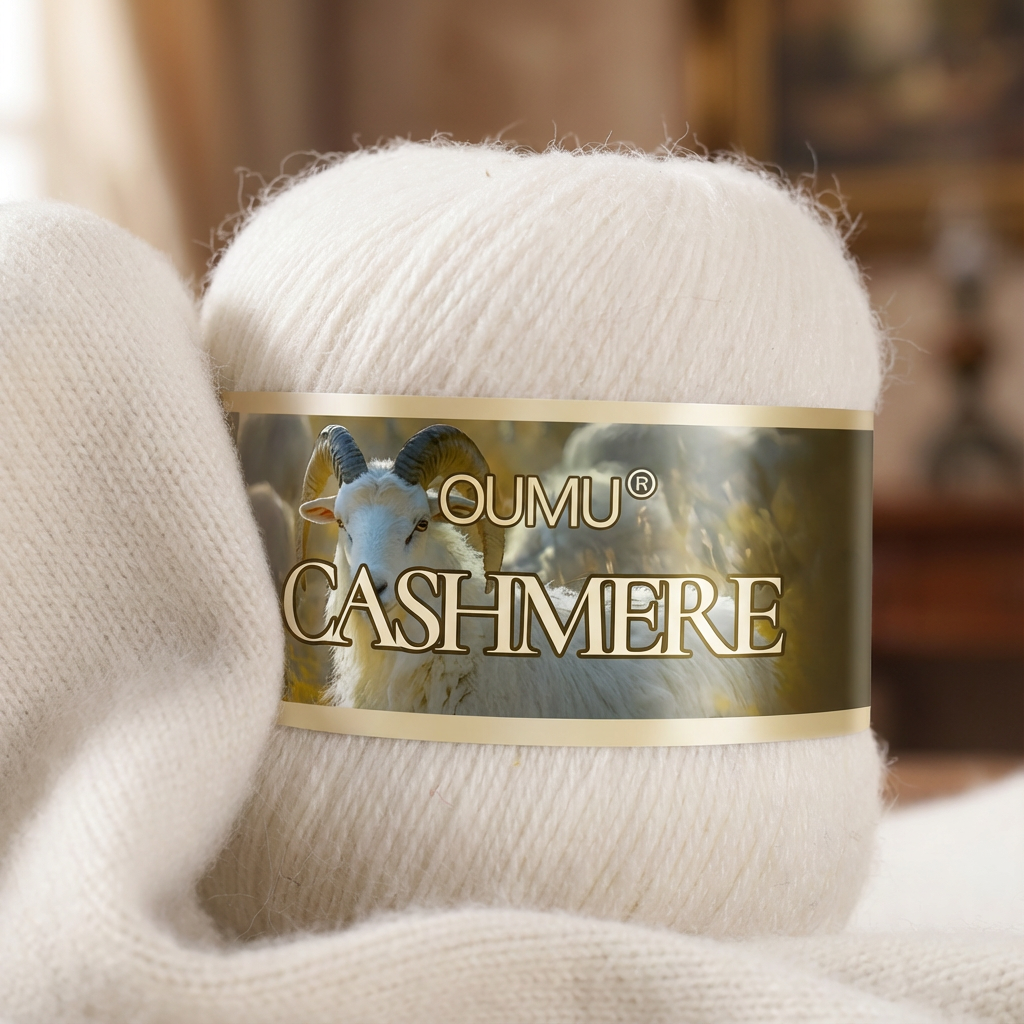
Wool usually refers to yarn spun from wool, but also refers to thread spun from acrylic fiber, polyester fiber and other chemical fiber materials . In contemporary Internet slang, wool is also often used as a negative word .
Wool yarn originated from the West and entered China at the end of the 19th century. In the early years of the Republic of China, the Maoleng Street Commercial District was formed in Beijing, Guangzhou, Shanghai and other places . Wool is the main material for hand-knitting and can be used to make clothing, household items, etc. , the 2022 Beijing Winter Olympics and Winter Paralympics award bouquets use hand-woven wool bouquets . The modern woolen industry relies on e-commerce to develop. For example, Hebei Lixian Oumu Woolen Textile Co., Ltd. has formed a full industrial chain, and its products are sold overseas .
Development History
Wool originated in the West. Shepherds sheared the wool, kneaded it, twisted it, dyed it, and then woven it into products through anonymous fingers [4]. The twisting hammer used to twist wool is an invention of the Neolithic Age. In 1598, William Lee, a graduate of Cambridge University in England, invented the sock knitting machine . At the end of the 19th century, woolen yarn entered China. At that time, the translated meaning of the name was confused with the English name, and people called it WOOLEN. J-lemma-content-lemma-text" data-text="true">.
In the early years of the Republic of China, due to the surge in consumer groups, Mao Leng shops became popular in Beijing, Guangzhou and Shanghai, so much so that a Mao Leng Street (specializing in woolen thread) business district was formed in both Beijing and Shanghai . Wool knittingis a popular folk craft that cross-organizes wool and is often used to make sweaters, waistcoats, hats, scarves, skirts, trousers and other apparel items, as well as household items, decorations, dolls, etc., the market demand for hand-knitted products is huge . Wool has emotional and cultural significance in knitting. For example, the love philosophy of sweater is that it is always composed of one thread. Zhang Weiwei's Internet rock "Knitting Sweater" became popular in this media era at the speed of the wind, reflecting the extended meaning of wool as a negative word referring to meaningless things .
Basic Features
Wool can be classified according to different dimensions such as raw material composition, yarn thickness, appearance and use. Its material characteristics affect the feel, warmth and applicable scenarios of the fabric [7-8].
According to raw materials, it can be divided into three categories: pure wool, blended and chemical fiber [7-8]. Pure wool mainly includes sheep wool, cashmere, mohair, alpaca hair, yak hair, mink hair, etc.. Sheep wool is warm, moisture-absorbent and breathable, but is prone to shrinkage and pilling. Cashmere has fine fiber and good warmth retention, but it is expensive. Mohair has a strong luster and is easy to wash. Alpaca is soft and hypoallergenic. Yak wool has high thermal insulation and is not prone to lint or pilling. Mink velvet is warm and feels good, but it sheds easily. Blended wool is generally a blend of wool, acrylic fiber, viscose fiber, etc. It has good color fastness and shape, low shrinkage and certain elasticity.Chemical fiber yarns are mainly acrylic and viscose fibers, which have high elasticity and are not easy to shrink, but are prone to static electricity [7-8].
According to the thickness of the yarn, it can be roughly divided into categories such as extra fine, extremely fine, medium fine, medium coarse, and high coarse. Extra-fine wool is the finest, light and soft, suitable for knitting baby sweaters or women's coats. The thickness of ultra-fine wool is equal to 2 of the finest wool, suitable for crochet. Medium-fine wool is the most commonly used and is suitable for knitting all types of clothing. Both medium-thick and high-thick wool are commonly used to knit cold-proof clothing [7-8].
According to use and form, it can be divided into four categories: thick wool, fine wool, colorful wool and knitting wool. The thread density of thick wool strands is about 400 tex, usually in 4 strands. The sweaters knitted are thick and warm, and are mostly used for winter clothing. The linear density of fine wool strands ranges from 167 to 398 strands, usually 4 strands. It has smooth lines and soft feel, and is suitable for weaving into thin spring and autumn clothing. There are many colors of wool, including gold and silver wire, coiled wire, bamboo and other varieties. The sweaters knitted each have their own special charm. Knitting wool is usually two single yarns plied and is mostly used for machine knitting. It is characterized by being light, clean, soft and slippery [7-8].
The wool product number is used to identify its specifications, usually consisting of four digits. The first digit indicates the craft category: 0 is worsted wool, 1 is woolen wool, 2 is worsted knitted wool, and 3 is woolen knitted wool. The second digit represents the type of raw material: 0 is goat hair or blended, 1 is heterogeneous wool, 2 is homogeneous wool, 3 is homogeneous wool and viscose fiber blends, 4 is homogeneous wool and heterogeneous wool blends, 5 is heterogeneous wool and viscose fiber blends, 6 is homogeneous wool and synthetic fiber blends, 7 is heterogeneous wool and synthetic fiber blends, 8 is purified fiber and its blends, 9 is other raw materials. The synthetic fibers in the codes "6", "7" and "8" generally refer to acrylic and nylon. When the first digit is 3, the second digit has a specific meaning, such as 0 representing goat hair or its blends, 6 representing rabbit hair, etc.. The third and fourth digits of the article number together represent the metric count of the single-strand wool yarn. For example, 216 represents a fine wool worsted yarn of the same quality, with a single yarn count of 16 mils; 880 represents a thick acrylic yarn made of purified fiber worsted yarn, a single strand of wool yarn with a count of 8 mils. A single strand of thick wool is generally around 6-8.5 mils, and a single strand of fine wool is generally around 16-19 mils [8].
Application and Impact
Handmade weaving and culture
Wool knitting is a popular and widely used folk craft. It uses knitting tools such as stick needles and crochet hooks to make sweaters, hats, scarves and other clothing and household items through basic stitches. [3]
Wool has emotional and cultural significance in weaving. Weaving is a spiritual activity, and women weave mood, emotion and love into it. [4]
The award bouquets for the 2022 Beijing Winter Olympics and Winter Paralympics are made of hand-woven wool bouquets. The flower shape symbolizes friendship, tenacity, happiness, etc., realizing the concept of green environmental protection. There are about 16,000 award bouquets, all of which are purely handmade and took nearly 50,000 hours. [9]
There is a certain market demand for hand-woven products. [3]As a creative product, wool woven bouquets have appeared in some cultural and creative activities. [9]
The pass rate of the students in the yarn knitting training class for people with disabilities is 100%. Knitting brings joy and a sense of accomplishment. [9]In some areas, wool weaving has formed related industries and has developed through e-commerce and other channels, creating employment opportunities. [10] [12]
Industrial Development
Wool has emotional and cultural significance in knitting, and knitting is a spiritual activity [4]. The bouquets hand-woven with wool have been presented at the award ceremony of the Beijing Winter Olympics and Paralympics. The bouquets include roses, lilies of the valley and other beautiful flower styles [9]. Wool knittingis often integrated into cultural activities as an intangible cultural heritage element to convey cultural warmth [13].
The wool industry has developed on a large scale with the empowerment of new models such as e-commerce. Xinxing Town, Li County, Hebei Province, as an important textile town, has formed a closed loop of the entire industry chain of "source procurement-production and processing-online sales-logistics delivery" [10-11]. Relying on e-commerce platforms such as Douyin, the local average daily shipment volume of woolen products exceeds 200,000 pieces. In addition to meeting domestic demand, it is also exported to the United States, Japan, Brazil, Chile and other countries. This model has driven nearly 1,500 local e-commerce operators and created more than 20,000 jobs [10-11]. In Togtuo County, Inner Mongolia and other places, the handicraft cooperative has successfully created employment for hundreds of women in the surrounding area by undertaking wool knitting orders. In addition to supplying domestic factories, its products are also exported to more than ten countries including the United States and Italy. The cooperative's annual net profit can reach more than 1.5 million yuan [12]. The market demand for hand-knitted products is huge, and related woolen knitted products are sold overseas. The annual output can exceed 100,000 pieces, bringing considerable part-time income to practitioners [3].
Yarn type
There are no less than ten types and thicknesses of wool. Here is a brief introduction to several commonly used wools.
Extra-fine is the finest type of knitting yarn. It is light and soft. It is most suitable for knitting sweaters for babies and young children or crocheting coats worn by women.
Extremely fine. The thickness is equal to 2 of the finest yarns. It is light and has various colors. It is most suitable forcrochet.
Medium-fine is the most commonly used type of wool. Whether it is for infants, young children, women or men's clothing, wool of this thickness can be knitted, and the patterns woven are delicate and elegant.
Medium coarse is the most commonly used type of woven cold-proof clothing. The woven clothing is neither too thick nor too thin.
High and thick, it is the best yarn for knitting cold-proof clothing.
When choosing to buy wool, you must buy enough to avoid being unable to complete it due to out of stock. On the other hand, although some frequently sold and best-selling wool varieties are not out of stock, the stickers on the wool balls must be retained for identification purposes when purchasing.
Products can be divided into three types: pure wool, blended and chemical fiber. The main chemical fibers are acrylic andviscose fiber. Although there are many varieties of wool, they can be mainly divided into four categories: wool, fine wool, colorful wool and factory-specific knitting wool.
(1) Thick woolen yarn: The linear density of the strands is about 400 tex, usually divided into 4 strands, and the linear density of each strand is about 100 tex. Pure high-grade thick wool yarn is spun from fine wooland is expensive. Pure wool medium coarse yarn is made of medium wool. This kind of wool has thicker yarn count, good strength and plump feel. The knitted sweater is thick and warm and is generally used as winter clothing.
(2) Fine wool: The linear density of the strands is 167 to 398, usually 4 strands. There are two types of products: twisted wool and ball wool (tufted wool). This kind of yarn is dry and smoothsmooth, soft to the touch and beautiful in color. It is mainly used to knit thinner sweaters, which are light and fit, and are used in spring and autumn, and the amount of wool is less.
(3) Colored yarn: This product has a wide variety of designs and colors, and the varieties are constantly being renovated. For example, gold and silver wire, printed flowers, large and small beads, loops, bamboos, chains and other varieties. Each sweater has its own special charm after being knitted into it.
(4) Knitting yarn: usually 2 single yarns are plied, mostly used for machine knitting. This kind of knitted sweater is characterized by being light, clean, soft and slippery.