
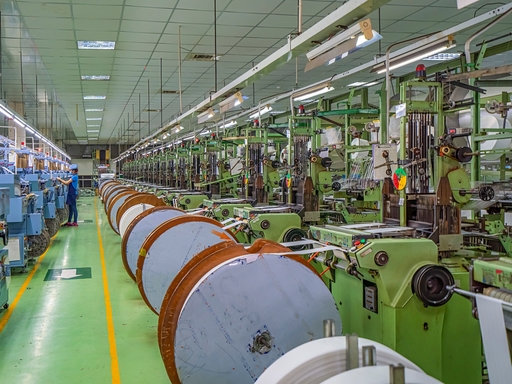
Southeast Asia’s textile engine is full of power! The latest official data shows that in the first quarter of 2026, Vietnam's textile and apparel exports reached 10.54 billion US dollars, a year-on-year increase of 2.3%, demonstrating strong resilience amid global market fluctuations. Among them, yarn exports performed particularly well, with a year-on-year increase of 33.9%, becoming the core engine driving exports.
Behind the data is a clear trend of accelerating the return of global textile orders to Vietnam. Relying on its geographical and cost advantages, Vietnam has become the core OEM base for overseas brands such as the United States. However, its textile industry has obvious shortcomings: 100% of cotton is imported, and 90%-95% of chemical fiber raw materials rely on external supply. With the rapid expansion of the industry, Vietnam's demand for Chinese fabrics, yarns, chemical fibers and wool blended raw materials has increased sharply. In the first two months of 2026, Vietnam's imports of apparel fabrics from China reached US$1.61 billion, accounting for 69.56% of its total imports, a significant year-on-year increase. This means that the deep integration of China-Vietnam textile industry chain is a foregone conclusion: Vietnam is responsible for garment processing, and China provides upstream core raw materials. For Lixian Oumu Woolen Textile Co., Ltd., the prosperity of Vietnam's textile industry directly translates into strong demand for blended raw materials and high-quality yarn, which is a major benefit for stabilizing foreign trade orders and expanding the Southeast Asian market.