
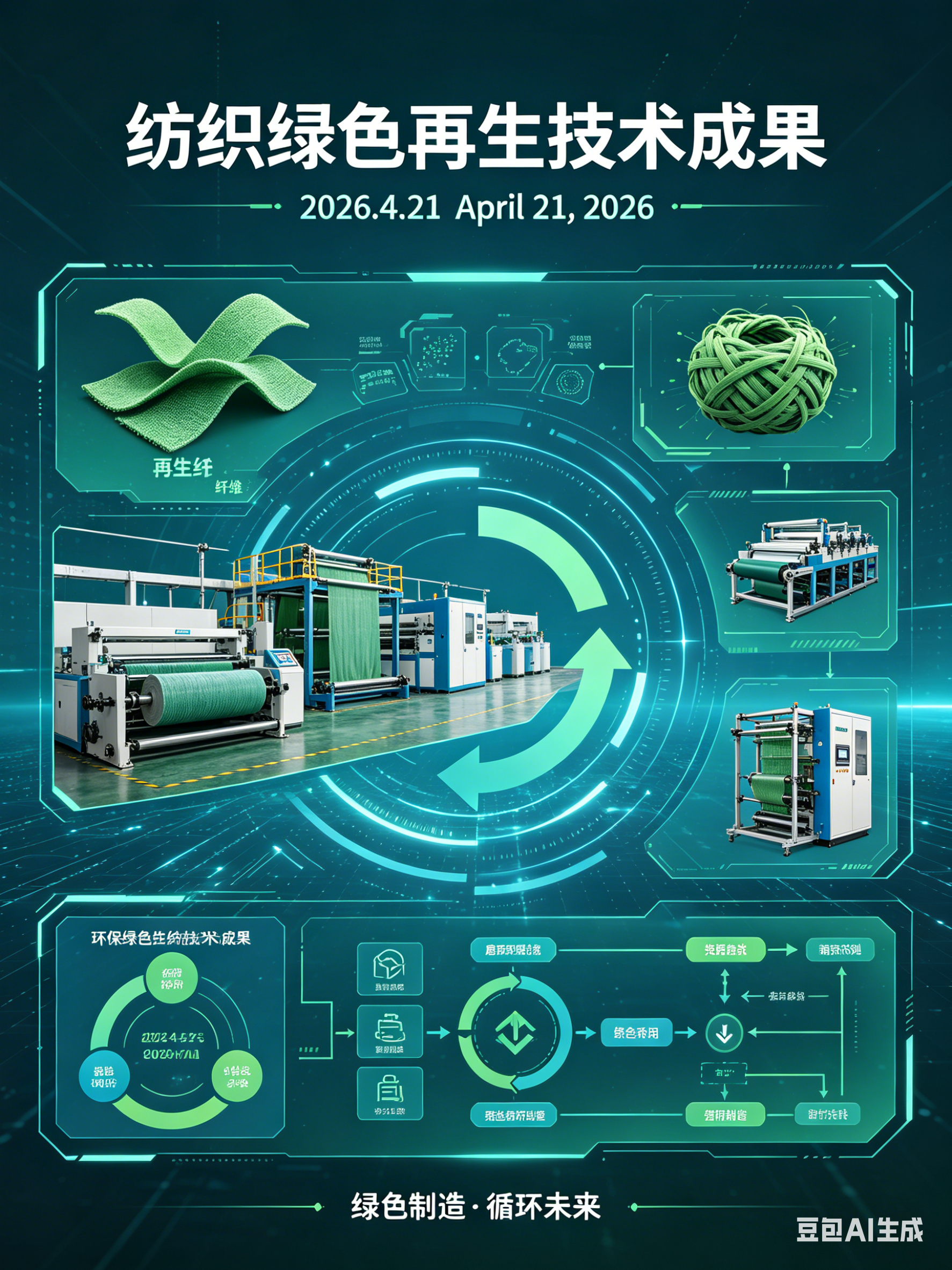
On April 21, 2026, the patent for "porous nonwoven materials based on microfiber leather waste regeneration" jointly developed by Mingxin Minorca and Mingxin Xuteng was officially announced. This technology effectively solves the industry pain points of recycling microfiber leather waste, achieves efficient recycling and high-value utilization of waste, and provides a new path for the green recycling development of the textile industry.
It is understood that the global annual output of microfiber leather waste has exceeded 1.5 million tons. The traditional treatment methods are mostly landfilling or incineration, which not only causes serious waste of resources, but also aggravates environmental pollution - landfilling makes polyurethane difficult to degrade for a long time, and incineration releases toxic gases such as dioxins. Previous recycling technologies in the industry either had low waste utilization rates and unstable product performance, or had complicated processes and high costs, making it difficult to achieve large-scale application.
The patented technology approved this time achieves efficient recycling of microfiber leather waste through innovative processes. This technology processes microfiber leather waste into scraps, which are combined with ES fiber webs to form a sandwich structure of "bottom fiber web - microfiber leather wastes - surface fiber webs", and are made into porous non-woven materials through a gradient hot rolling forming process. This material has excellent mechanical properties, sound insulation and thermal insulation properties, with a compressive modulus of 0.3-1.2MPa and an apparent density of only 0.65-0.95g/cm³, which is 20%-30% lighter than similar materials. The waste content is 70%-80%. It can be widely used in building sound insulation, thermal insulation and other fields.
Industry experts said that the implementation of this patented technology not only realizes the resource cycle of "replacing waste with new" and reduces the cost of raw materials by more than 40%, but is also in line with the global "double carbon" goal and the green transformation trend of the textile industry. With the continuous promotion of GRS environmental certification, environmentally friendly recycled fiber has become a key bonus in export competition. The popularization of such recycling technology will promote the textile industry to gradually form a green closed loop of "production-waste-regeneration-reuse", helping the industry achieve high-quality and sustainable development.